Understanding Generation: The Role of GenCos in Nigeria's Electricity Value Chain
Every kilowatt-hour starts here. But a power plant is only as strong as its fuel, its finances and its customers' ability to pay.
Imagine you run a small generator business on your street. You buy the fuel yourself, service the machine yourself, and sell light to your neighbours. But they pay at the end of the month, some of them late, some of them only half. Then fuel goes up. Before long, the generator is parked and the whole street is in the dark, and nobody quite agrees whose fault it is.
That is, in miniature, the life of a generation company. GenCos are where the electricity value chain begins. They convert gas, water and steam into power, sell it into the market and hope to be paid in time to buy the fuel for tomorrow. That last part, the payment, is where Nigeria's generation segment is under the most strain.
What GenCos do
A GenCo owns and operates one or more power plants, keeps them maintained and available, buys fuel, and delivers electricity to the grid when the system operator calls on it. Its revenue depends on how much capacity it makes available and how much energy it delivers, and on whether the market pays its invoices.
The fleet
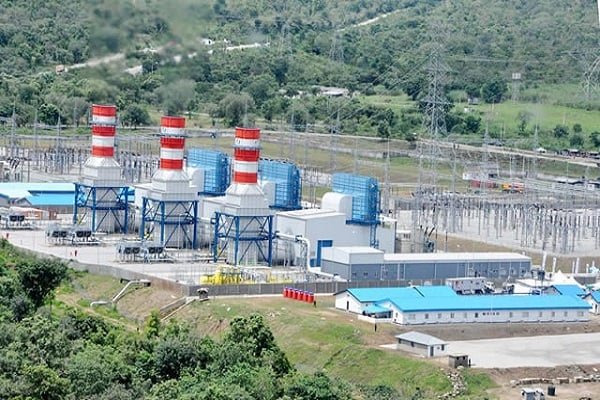
Nigeria has 28 grid-connected power plants with 13,625 MW installed: five hydro plants, two steam plants, nineteen open-cycle gas turbine (OCGT) plants and two combined-cycle gas turbine (CCGT) plants. The fleet is owned by a mix of privatised GenCos, government-owned plants and independent power producers. Because the great majority of the plants are thermal, the sector depends heavily on gas, which makes gas supply and gas payments the sector's most sensitive pressure point.
Share of Nigeria's 28 grid-connected plants
Bars show number of plants, not megawatts. Source: NERC quarterly reports.
How GenCos get paid
Most grid power is sold through Nigeria Bulk Electricity Trading Plc (NBET), which in turn is paid by the DisCos, so what GenCos receive depends on what travels up the chain. Some plants also sell directly to customers under bilateral contracts. Even here payment is uneven: in Q2 2026, three international bilateral customers paid $8.675 million against an invoice of $18.84 million, a remittance rate of 46.02%.
| Customers | Invoiced | Paid | Remittance |
|---|---|---|---|
| Three international bilateral customers | $18.84 million | $8.675 million | 46.02% |
Source: NERC Q2 2026 report.
The fuel-and-money squeeze
GenCos say they receive only about 35% of their monthly invoices, while still having to pay gas suppliers, equipment makers, maintenance contractors, lenders and staff. The result is a chain reaction: unpaid generators cannot pay gas suppliers, suppliers reduce or stop deliveries, and plants go offline. The generators' association says that Ibom Power, for example, has not generated since 2025 because of its debts and gas cut-offs.
Share of invoices paid
The 35% figure is a GenCo claim, made by the generators' association. The 46.02% figure comes from NERC's Q2 2026 report.
The numbers on debt are contested. Government says verification reduced legacy claims from more than ₦4 trillion to about ₦3.3 trillion, while GenCos have said the sector's obligations are higher. What is not in dispute is the scale of the response: a ₦4 trillion Power Sector Debt Reduction Programme has issued two series of bonds.
| Step | Amount | Status |
|---|---|---|
| Series 1 bonds | ₦501 billion | Issued January 2026 |
| Series 2 bonds | ₦728.979 billion | NBET began disbursing on 9 October 2026 |
| Phase one payments | ₦333 billion | Paid to eight GenCos covering 17 plants |
Sources: NBET announcements; Federal Government statements.
The generators' association has warned that the bonds cover obligations up to December 2024, while debts from 2025 and 2026 keep accumulating.
Signs of resilience, and of exit
Generation is not only a story of decline. Several plants run very well, and available capacity is moving in the right direction.
At the same time, large industrial customers are not waiting: NERC reported about 20 self-generation licences above 1 MW in Q3 2025, a sign that serious users are building their own supply away from the grid.
The GridIQ Take
GenCos cannot be judged on installed megawatts alone. Their performance depends on three things that sit partly outside their control: fuel they can afford to buy, a market that pays on time, and a grid that can take what they produce.
The bond payments are a welcome reset, but a reset only works if new debts stop forming. That puts the pressure back on metering, billing and collection, which is where the rest of this series starts.
Seen a figure on GenCo debt or payments that does not add up?
Keep reading
Sources and notes
- NERC quarterly reports (plant mix: five hydro, two steam, nineteen OCGT, two CCGT); NERC factsheets for April and September 2026.
- NERC Q2 2026 report (international bilateral customer payments).
- NBET announcements on Series 1 and Series 2 bonds; Federal Government statements on verified liabilities (about ₦3.3 trillion).
- Statements by the Association of Power Generation Companies on invoice payment levels, gas cut-offs and post-2024 debts. These are industry claims and are disputed in part by government.
- NERC Q3 2025 report on self-generation licences.
© 2026 GridIQ Analytics and Insights Ltd. This is an editorial explainer, not investment advice.