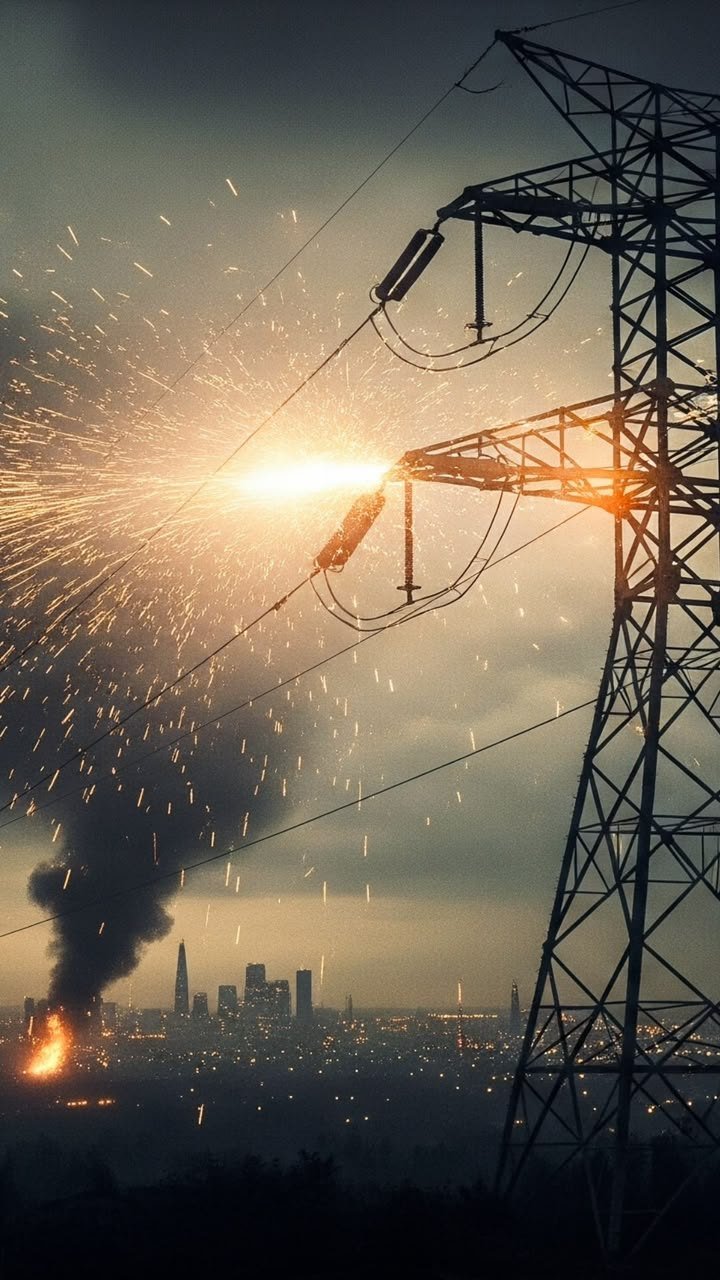
NEPA don take light again? Before you blame the transformer, know this: there are four kinds of outage, and the transformer is behind only one of them.
When the light goes, most of us ask the same two questions: why, and for how long?
The honest answer depends on the type of outage.
The gap behind the darkness
Part of the picture is a big gap in the system. Nigeria has 13,625 MW of installed generation capacity, but only about 4,089 MW was effectively available in March 2026, roughly 30% of what is on paper. And the plants that do run depend heavily on gas, which is where much of the pressure comes from.
Generation capacity, March 2026
Gas for thermal plants, February 2026
Sources: NERC Operational Performance Factsheet (10 April 2026); NISO statement on gas supply constraints (27 February 2026). mmscf/d = million standard cubic feet per day.
1. Forced outage
This is when power cuts suddenly because equipment fails or the grid is disturbed. It could be a faulty transformer or a tripped line, and there is no warning.
Faults happen at every level of the network. DisCos have pointed to a circuit breaker problem on a 33kV feeder in Kano, tripping on feeders in Ibadan, and technical faults at a transmission station serving parts of Abuja. Some of those faults sit on the DisCo’s own network and others sit upstream on the transmission side. Eko DisCo has also pointed to vandalism of underground cables, with the Festac axis recording the highest number of incidents.
Because nobody saw it coming, nobody can promise a timeline. How long it lasts depends on how severe the fault is, how long the repair takes and whether the parts are available.
2. Scheduled outage
This is a planned power cut for maintenance or upgrades. Your distribution company should reach out and tell you it wants to service equipment or carry out some work.
The crew needs the line switched off so they can work safely. It is like turning off the socket at home before you fix something, so it doesn’t shock you.
You are also entitled to notice. NERC’s customer service guide says a DisCo should give customers at least three working days’ notice before cutting supply for planned maintenance. How long it lasts depends on how big the work is.
3. Load shedding (power rationing)
This is when power is shared out in turns. It happens when demand is higher than the supply available, so not everyone can be served at once.
Gas is a big part of the story. Most of Nigeria’s generation capacity is gas-fired. In February 2026, NISO said thermal plants needed about 1,629.75 million standard cubic feet of gas per day but were getting about 692, less than 43% of what they needed. That held average available generation at roughly 4,300 MW, and the energy allocated to DisCos was reduced to match.
How long it lasts depends on the available supply, the demand and the rotation plan.
4. System-wide outage
This is a large-scale failure that hits many areas, or the whole grid, at once. It can come from many things: major faults, extreme weather, a shortage of gas to power plants, or an unstable system.
Recent history shows how it works. The grid collapsed on 23 January 2026 and again on 27 January. NISO’s preliminary account of the second disturbance pointed to the simultaneous tripping of multiple 330kV transmission lines and the disconnection of some generating units. Grid collapses are typically cascading failures, where one fault triggers a chain reaction through the system.
How long it lasts depends on how widespread the damage is.
The four types at a glance
| Type | What triggers it | Notice? | What drives how long it lasts |
|---|---|---|---|
| Forced | Equipment failure, faults | None | Fault severity, repair time, parts |
| Scheduled | Maintenance, upgrades | Yes | Scope of the work |
| Load shedding | Demand above supply | Sometimes | Supply, demand, rotation plan |
| System-wide | Major fault, grid instability | None | How widespread the damage is |
What can you do when it happens?
You can’t stop an outage, but you aren’t powerless.
- Forced outage: report the fault. NERC says to make a written complaint at your DisCo’s nearest Customer Care Unit (CCU) and to keep the acknowledgement. If you are not satisfied with the response, escalate to the nearest NERC Consumer Forum office.
- Scheduled outage: check your notice. If a planned cut came with none, raise it through the same complaints route.
- Load shedding: know your band. Find out which band your feeder is on. Band A feeders are meant to get a minimum of 20 hours of supply a day. If you are consistently getting less than your band promises, keep a simple log of the hours and complain with it.
- System-wide outage: wait for official word. There is nothing for you to report, because it is a grid-level event. Follow official updates from your DisCo for restoration news instead of rumours.
The GridIQ Take
Reliable electricity is not just an energy-sector issue. It is a productivity issue, a business issue and, ultimately, a development issue.
You cannot hold a system to account for a problem you cannot name. Knowing the difference between a fault, a planned shutdown, a supply shortage and a grid collapse helps you ask better questions and expect better answers from the industry.
Different outages need different solutions. Understanding the difference is the first step toward a more reliable power sector.