Power Theft: Who Really Pays?
The electricity may look free today. But someone, and ultimately the entire system, pays tomorrow.
Every unit of stolen electricity has already been paid for by someone. The generator bought the gas. The grid carried the power. The DisCo bought it from the market and sent it down the feeder. Only one thing is missing: the revenue that was supposed to come back.
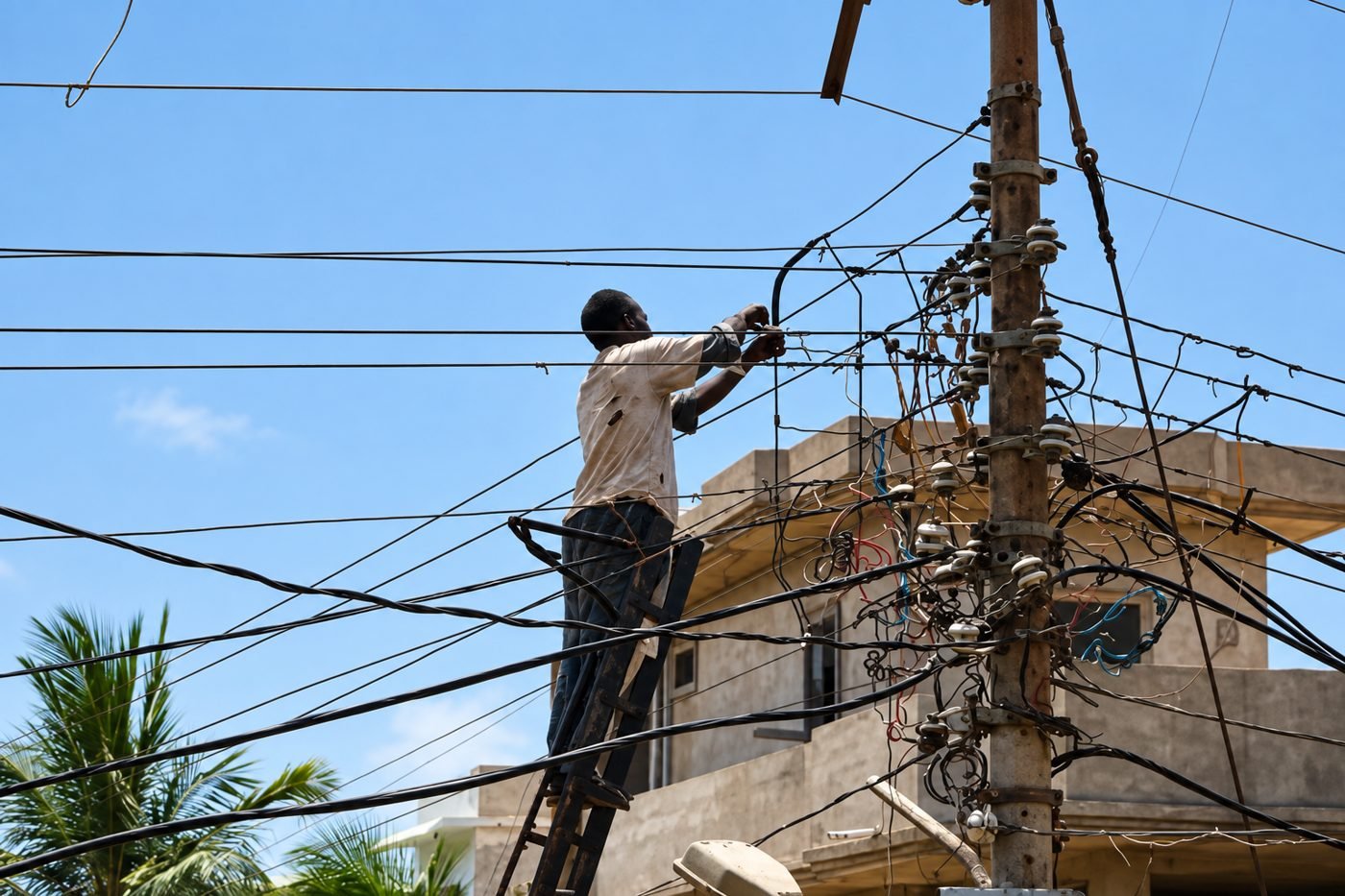
That is the part of power theft that rarely makes it into the conversation. The act itself is small and private: a bypassed meter, a hooked-up line, a reconnection nobody authorised. For the person doing it, the appeal is simple. Use electricity without paying for it. But the consequences do not stay at one meter, one house or one bill. They travel up the entire electricity value chain and come back down as weaker networks and poorer service.
What power theft actually looks like
Power theft takes four common forms: meter bypass, illegal connections, meter tampering and unauthorised reconnection after a legitimate disconnection. They differ in method, but they share one economic result. Energy leaves the network and money does not return to it.
This is why GridIQ treats power theft as economic sabotage and not as a victimless shortcut. Electricity is expensive to generate, transmit and distribute, and the transformers, feeders and meters that carry it need constant maintenance. All of that is funded by revenue. Remove the revenue and the system is paying for yesterday's electricity out of the budget for tomorrow's.
The ₦100 problem
Imagine it costs ₦100 to produce and deliver 100 units of electricity. All 100 units are consumed. But because some electricity is stolen, bypassed or simply not paid for, the system recovers only ₦70. The ₦100 has been spent and the power has been used. The question is where the money comes from to deliver tomorrow's electricity.
That illustration is not far from reality. In fact, current figures suggest it is slightly too generous.
One caution matters here. This gap is not all theft. It combines technical losses on the network, energy that is delivered but never billed, and bills that are issued but not paid. Theft and bypass feed all three. GridIQ is not claiming that every missing naira was stolen. We are saying that theft is one of the drivers, it is one the consumer controls directly, and its cost is shared by everyone else.
What the numbers say
In Q1 2026, NERC reported that none of the DisCos met their approved ATC&C targets. The weighted average loss of 37.44% was worse than the 34.90% recorded in the previous quarter, and it was more than double the 16.92% target. In 2025, the 11 DisCos were supplied with electricity valued at ₦3.68 trillion, billed ₦2.99 trillion and collected ₦2.32 trillion. About ₦695 billion of the gap was never billed, and a further ₦669 billion was billed but never recovered.
The picture is also uneven. In February 2026, Eko DisCo posted a collection efficiency of 94.12% and Abuja DisCo 89.28%, while Kaduna DisCo recorded 49.27%. In Q1, Kaduna's ATC&C loss was recorded at 69.66% against a target of 18.18%. Where the gap is widest, so is the damage to the network and the customers on it.
The pressure also does not stop with the DisCos. In Q2 2026 they were invoiced ₦410.38 billion for generation and transmission-related services and remitted ₦385.44 billion, a remittance rate of 93.92%. Every shortfall at the meter becomes a squeeze on the generators, gas suppliers and market operators further up the chain. It is the same pressure that produced the legacy debts the Federal Government has been trying to clear, including through the first bond under the Presidential Power Sector Debt Reduction Programme in December 2025.
The ripple effect
Power theft does not end at the meter. It starts a sequence that weakens the whole system:
- Electricity is stolen
- Revenue that should return to the market is lost
- Less money is available to pay for generation and keep the network running
- Less money is available for maintenance, meters, transformers, feeders and new investment
- The system becomes weaker
- Service suffers
The chicken-and-egg problem, taken seriously
This is where the argument gets difficult, and where it should be honest. Many customers who bypass meters or refuse to pay will tell you the same thing: the service is poor. Many DisCos will tell you the reverse: they cannot improve service on revenue they never collect.
The consumer asks“Why should I pay when I don't get enough electricity?”
The electricity provider asks“How do we improve supply if electricity consumed is not paid for?”
Both questions are fair, and each feeds the other. Poor service encourages non-payment and theft. Theft and non-payment weaken the ability to improve service. The cycle only breaks if both sides move together. Customers who wait for perfect service before paying, and utilities who wait for perfect payment before investing, will wait a very long time.
Power theft is also against the law
Electricity theft is not simply a way to avoid a bill. It can be a criminal offence, and the penalties exist at two levels.
Under the Electricity Act 2023. Section 211 covers unauthorised connection and reconnection, and fraudulent interference with a meter. On conviction it provides for a fine of up to ₦500,000, imprisonment of up to three years, or both, plus an additional ₦10,000 for every day the offence continues. The Act also treats theft of electricity as a separate offence, with fines tied to a multiple of the financial gain and custodial sentences, so exposure can be heavier than Section 211 alone suggests.
Under NERC's Amended Order on Unauthorised Access, Meter Tampering and Bypass, in force since 22 January 2025. Customers must pay administrative charges, including meter replacement, before reconnection, plus a reconnection fee.
| Customer category | First offence | Repeat offence |
|---|---|---|
| Non-MD, single-phase | Up to ₦100,000 | Up to ₦150,000 |
| Non-MD, three-phase | Up to ₦200,000 | Up to ₦300,000 |
| Reconnection fee | ₦10,000 (non-MD) · ₦50,000 (MD) | |
DisCos may also disconnect unauthorised connections without notice under the Customer Protection Regulations 2023, and may back-bill for energy consumed. Put simply, power theft is not free power. The consequences can cost far more than the electricity that was taken.
So who is responsible for stopping it?
Everybody. The shared bargain only works if each party carries its own part of it.
The electricity industry
Improve service. Meter every customer, fix billing, detect illegal connections, and protect the network. Better service is the DisCos' side of the bargain, and it is what makes enforcement credible.
Regulators and law enforcement
Enforce the rules that already exist. Penalties that are written down but never applied do not deter anyone.
Consumers and communities
Do not bypass your meter. Do not make illegal connections. Do not tamper with infrastructure. Do not reconnect yourself. Do not ignore theft in your community. Report it.
The last of these is not a moral lecture. It is self-interest. Electricity infrastructure is shared. The transformer serving the person who is stealing power may also serve your home. The feeder being overloaded may also supply your business. And the revenue lost today is part of the money the system needs to keep your lights on tomorrow.
The GridIQ Take
Power theft offers momentary gratification, with consequences that ripple through the entire electricity system. We cannot demand a stronger electricity system while weakening the economics that sustain it.
At the same time, the industry must deliver better service, better metering, greater transparency and greater accountability. It is a shared bargain:
If it costs ₦100 to provide today's electricity, the system must be able to recover the money required to provide tomorrow's.
Pay for the power you use. Protect electricity infrastructure. Report electricity theft.
Because what we take from the system today may be the electricity we do not have tomorrow. Let's keep the lights on.